
There was no farewell.
No announcement.
No final gathering.
No last prayer.
The village did not disappear in a single day.
It faded—quietly, patiently—until one day, the doors were locked, and no one returned to open them.
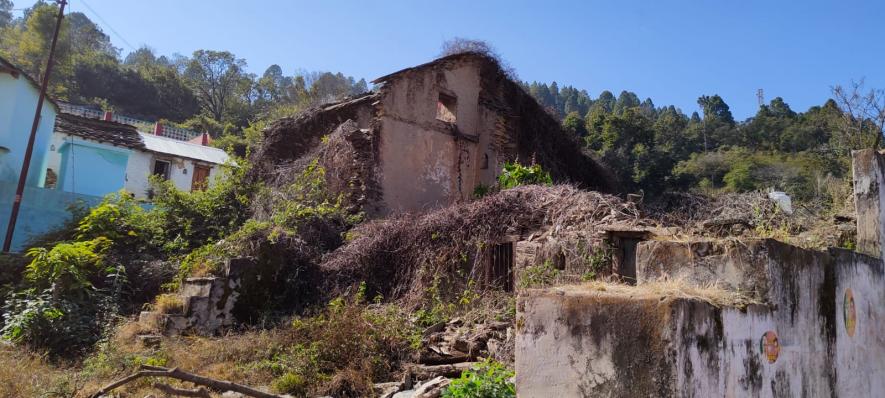
A Village That Once Breathed
Once, this village had a rhythm.
Mornings began with the sound of footsteps on stone paths, women heading toward fields, children rushing to school with bags larger than their backs. Smoke rose from kitchens. Bells rang softly from a small temple that had never known silence.
The village breathed—not loudly, but steadily.
It was not rich.
It was not famous.
But it was alive.
The First Departure
The first family left for work.
“Just for a few months,” they said.
The second left for education.
The third followed for medical reasons.
Then another.
And another.
Each departure felt temporary. Each return was promised.
But promises, like paths, grow faint when not walked.
Doors That Closed One by One
Houses began to change.
Windows stayed shut longer than usual. Courtyards gathered dust. Weeds pushed through stones that once felt footsteps every day.
One house was locked.
Then another.
Then a row of them.
The village learned a new sound—the click of locks echoing in empty lanes.
No one noticed when the last door was locked.
Because no one was left to notice.
When the School Fell Silent
The school closed before the village did.
First, classes merged.
Then teachers were transferred.
Finally, the bell rang one last time.
The playground grew wild.
Blackboards faded.
The laughter that once spilled into the valley never returned.
A village without children does not die immediately.
It waits.
The Last Resident
For a while, one elderly man remained.
He fed himself, tended a small patch of land, and waited.
When asked why he stayed, he said,
“If I leave, who will lock the temple?”
When he finally left, the temple was locked too.
Faith, it seemed, had also migrated.
What Remains
Today, the village still exists on maps.
But maps do not show silence.
They do not show:
- kitchens that will never cook again
- fields that remember hands
- doors waiting for keys that will never turn
The village stands intact—but hollow.
A museum of lives interrupted.
Was It Abandoned—or Forgotten?
People argue about reasons:
- lack of roads
- lack of schools
- lack of hospitals
- lack of jobs
All true.
But none explain the ache of locked doors.
Because what truly vanished was not population—it was possibility.
The Door That Still Waits
Sometimes, during festivals, someone returns.
They clean the courtyard.
Light a lamp.
Sit quietly for a while.
The door opens briefly.
And then it closes again.
Waiting.
Why This Story Matters
Because this village is not alone.
There are hundreds like it in Kumaun.
Thousands across the hills.
And every locked door asks the same question:
If a village disappears quietly, does anyone hear it?
This Is Where the Series Begins
This story is not about one village.
It is about all the villages waiting in silence—
hoping someone remembers them before the doors rust shut forever.