
How the Way You Think Shapes Your Success
Why do some people grow stronger after failure while others feel defeated by it?
Why do certain individuals keep learning, improving, and adapting—while others stay stuck despite talent?
In Mindset, psychologist Carol S. Dweck explains that the answer often lies not in ability, but in belief—specifically, what we believe about intelligence, talent, and growth.
This book quietly challenges the way we define success.
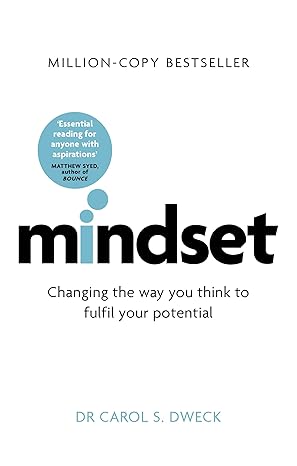
About the Author: Carol S. Dweck
Carol S. Dweck is a renowned psychologist and professor at Stanford University, known for her decades of research on motivation, personality, and development.
Her work on fixed vs. growth mindset has influenced education, business, sports, and personal development worldwide.
Unlike many self-help authors, Dweck’s ideas are rooted in scientific research, not motivational slogans.
What Is Mindset About?
At the heart of the book is a simple but powerful distinction:
- Fixed Mindset – Believing abilities are static and unchangeable
- Growth Mindset – Believing abilities can be developed through effort, learning, and persistence
According to Dweck, this single belief can shape:
- How we handle failure
- How we approach challenges
- How we learn
- How we relate to others
1. Fixed Mindset: When Fear of Failure Holds You Back
People with a fixed mindset often:
- Avoid challenges
- Fear mistakes
- Seek validation
- Feel threatened by others’ success
Failure feels personal—like proof of inadequacy.
This mindset quietly limits growth, even in highly talented individuals.
2. Growth Mindset: Learning Through Effort and Feedback
A growth mindset encourages:
- Curiosity over fear
- Effort over ego
- Learning over proving
People with this mindset see failure as:
- Feedback, not identity
- A step, not a dead end
This shift in thinking doesn’t guarantee success—but it creates the conditions for it.
3. Mindset in School, Work, and Relationships
Dweck shows how mindset influences:
- Students who love learning vs. those who fear exams
- Employees who grow vs. those who plateau
- Leaders who inspire vs. those who control
- Relationships that evolve vs. those that stagnate
The book makes it clear: mindset affects every area of life, not just career or academics.
What Makes Mindset Different from Typical Self-Help Books?
- Backed by research, not hype
- Practical examples from real life
- No unrealistic positivity
- Encourages effort, not shortcuts
It doesn’t say, “You can do anything.”
It says, “You can improve—if you’re willing to learn.”
Who Should Read Mindset?
This book is ideal for:
- Students and educators
- Professionals seeking long-term growth
- Parents and coaches
- Leaders and managers
- Anyone who fears failure or criticism
Key Takeaways from Mindset
- Talent alone is not enough
- Effort fuels growth
- Failure is information, not judgment
- Praise the process, not just results
- Learning never truly ends
Final Thoughts: Is Mindset Worth Reading?
Yes—especially if you want lasting change, not temporary motivation.
Mindset doesn’t push you to work harder.
It helps you think differently, which changes how you act over time.
That shift can be life-changing.
📘 Where to Buy Mindset
👉 Check the latest price and availability on Amazon
https://amzn.to/4qDSyKL
⭐ Rating: 4.6 / 5
Insightful. Practical. Transformational.