
In Kumaun, gods do not live far away.
They do not reside only in stone temples or ancient scriptures.
They walk among us.
They listen from forest paths, pause at village thresholds, and travel silently with shepherds crossing high ridges. In Kumaun, faith is not distant or abstract—it is familiar, woven into daily life with quiet certainty.
Where the Divine Feels Near
Here, people do not ask whether the gods exist.
They ask whether the gods are pleased.
A tree spared during construction, a stone left untouched by the road, a whisper of gratitude before beginning a journey—these are not superstitions. They are acknowledgments.
The land itself is sacred.
Every village has its guardian deity. Every forest has a presence. Every path has a story of intervention, warning, or protection passed down through generations.
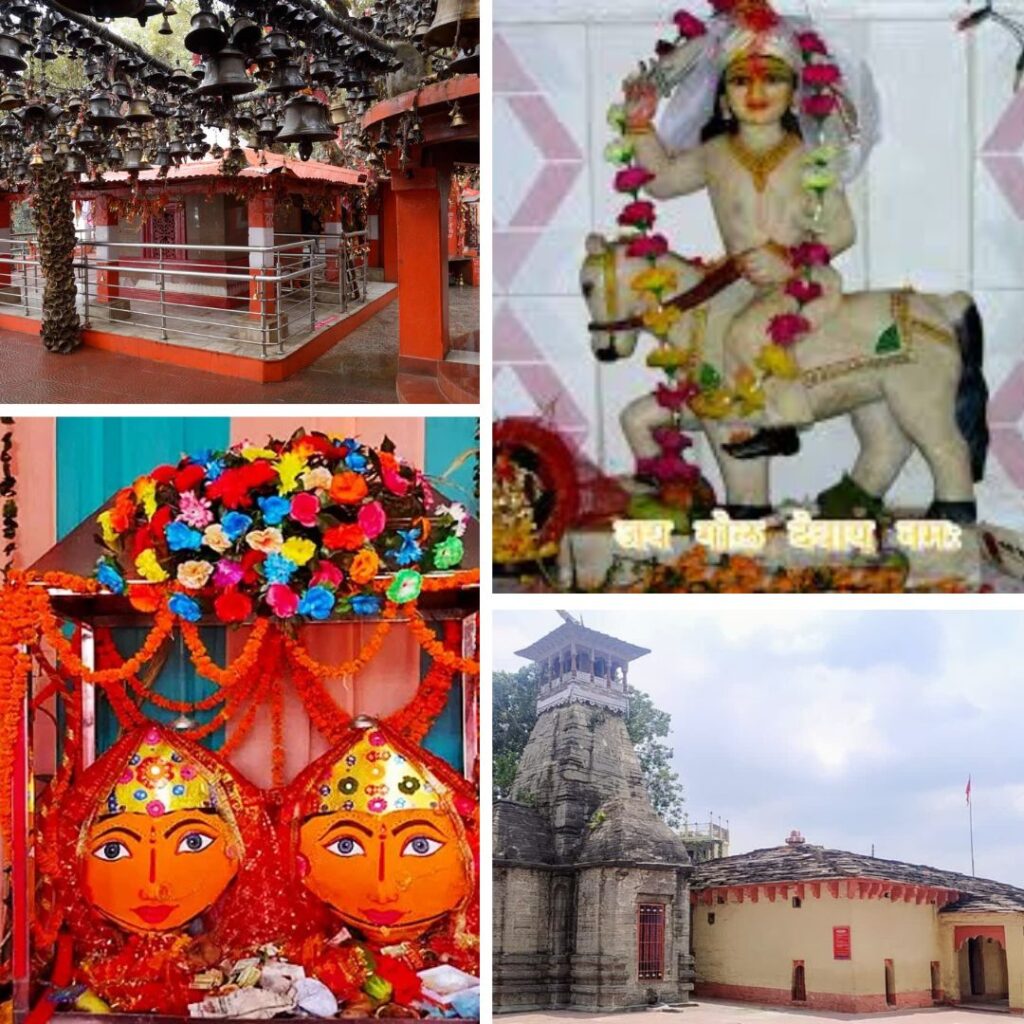
Golu Devta: The God Who Listens
Among Kumaun’s many deities, Golu Devta stands apart—not because of grandeur, but because of trust.
He is the god of justice.
People come to his temples not with offerings of wealth, but with letters. Simple pieces of paper folded carefully, carrying prayers written in everyday language—requests for fairness, truth, resolution.
These letters hang from temple walls, fluttering in the mountain breeze like unanswered questions waiting patiently for justice.
And when prayers are fulfilled, bells are offered—not as display, but as gratitude.
In Kumaun, justice is not demanded loudly.
It is trusted.
Nanda Devi: The Mother Who Protects
If Golu Devta is justice, Nanda Devi is belonging.
She is not only a goddess; she is a mother, deeply woven into Kumauni identity. Her presence is felt during festivals, songs, and stories told by elders on winter nights.
The Nanda Devi Raj Jaat is not merely a pilgrimage.
It is a farewell, a reunion, and a promise—all at once.
Through her, the mountains become maternal. Stern, yes—but protective. Demanding respect, but offering shelter.
Local Gods, Living Traditions
Beyond the widely known deities, Kumaun is rich with gram devtas—local gods who belong to specific villages, forests, or families.
They do not seek temples of marble.
They accept simple shrines, quiet rituals, remembered rules.
Before weddings, harvests, or long journeys, these gods are consulted—not out of fear, but relationship.
They are not above life.
They are part of it.
Faith Without Spectacle
Kumauni faith is rarely loud.
There are no grand processions every week, no constant announcements of belief. Devotion here is steady, understated, and deeply personal.
A lamp lit at dusk.
A prayer whispered before sleep.
A promise kept quietly.
Faith does not interrupt life in Kumaun.
It guides it.
Stories That Refuse to Fade
Every family carries stories—of a god who warned through a dream, of a ritual forgotten and consequences felt, of protection granted at the last moment.
Skeptics may dismiss them. Believers do not argue.
Because these stories are not meant to convince.
They are meant to remember.
Walking with the Invisible
To walk through Kumaun is to walk with the invisible.
The gods here do not demand attention.
They simply remain present.
In forests.
In villages.
In conscience.
And perhaps that is why faith here feels different—less about belief, more about relationship.
Because when gods walk among you, faith becomes less about worship, and more about how you live.
Why the Gods Stay
They stay because people remember.
They stay because traditions are lived, not performed.
They stay because respect is practiced, not preached.
In Kumaun, the gods have never left.
They walk quietly beside those who know where to look.